How to Recover From Eating Out When You Never Slow Down
Non-member post. Unprompted and unsponsored. Published June 23, 2026. For educational purposes only. This is not medical advice - please consult your healthcare provider.
Here are a series of small recovery habits for people who eat out often, travel constantly, and rarely get to slow down.
If you are reading this between meetings, in an airport, in the back of a car, or after another dinner you did not cook, this is for you.
A lot of high-performing people are living at a pace that does not leave much room. The days are long. The meals happen out, often rich and carb heavy, often eaten quickly because there was a gap and you took it. You’re not focused on the food, you’re focused on the conversations, the stakes, the deal, the schedule. By evening you are running on very little. The food is not the failure here. The pace is just relentless, and recovery rarely gets a turn.
So let us start somewhere kinder. You are not doing it wrong. You are doing a lot. The goal is not to eat perfectly or to earn your food. The goal is to fold small moments of repair back into a demanding life, in ways that actually fit it.
A Meal Worth Savoring
This week, Birch Cove founder, Sarah Parkins ate and thoroughly enjoyed a turkey club sandwich and fries. Not a dish she typically eats but this week she chose it happily. She shared lunch with someone she loves, in a place she loves, in a restful and unhurried state. No clock. No guilt. Just presence.
That kind of meal is good for you in ways a nutrition label never captures. A calm, connected nervous system digests differently than a rushed or stressed one. The pleasure is part of the medicine and part of the nourishment.
She ate well and she ate happily. And then, because she wanted to, she gave her body a little support afterward. Both are acts of the same care. This is a rhythm worth borrowing, making your own - even in your busiest weeks.
One Small Move: A Recovery Tonic
A recovery tonic is not a meal replacement, a detox, or a cleanse. There is nothing to undo.
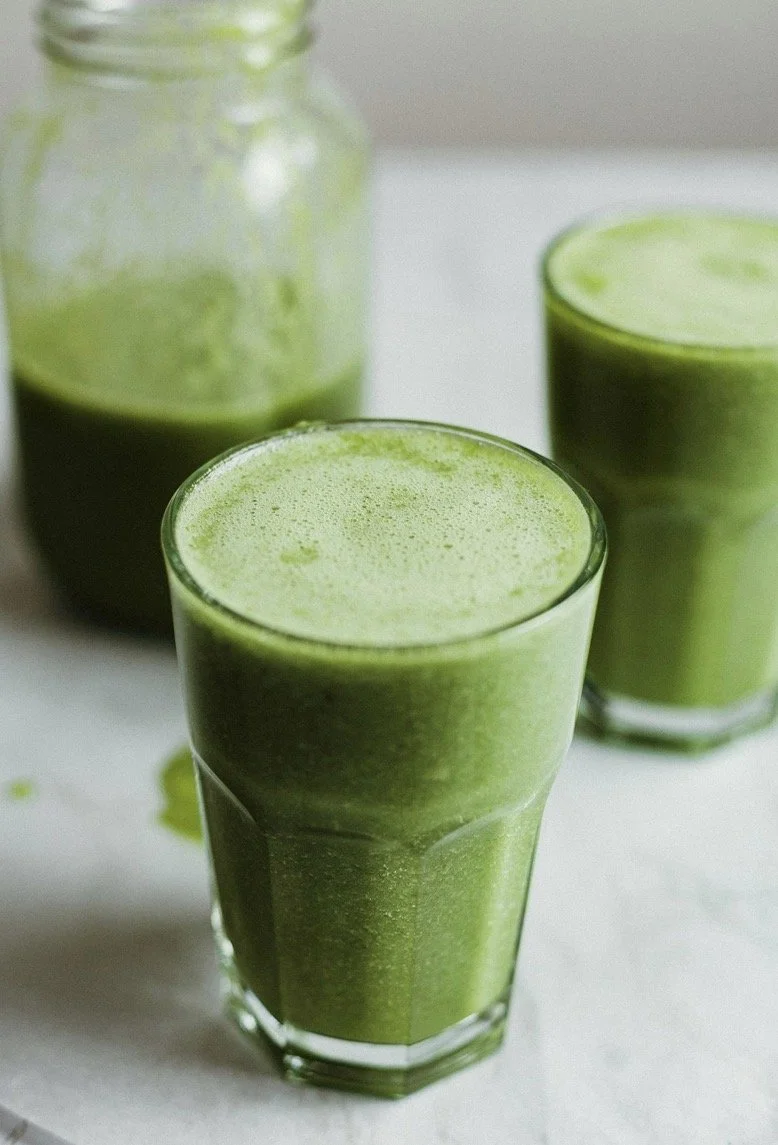
It is a soft, functional blend that keeps the body company as it returns to balance after a richer meal. Sarah made hers in her Beast blender in minutes. A handful of dandelion greens, lettuce, and fennel, topped up with water, a little local honey, prebiotic fiber, and marine collagen peptides. Nothing extreme. Nothing punishing. A few intentional things, each supporting a different layer of recovery. Not a giant glassful either, a small, easy to drink 4oz measure.
After a richer, higher-fat meal, the body leans into more work on its own. It’s very capable at this. It slows down to do the job properly. Bile rises to break down the fat. There may be a little bloating, some fluid shift from the salt, a gentle rise and settle in blood sugar. None of this is a problem. It is the body doing what it knows how to do.
So Sarah did not override any of it. She offered support. The dandelion encourages bile flow. The fennel eases that heavy feeling. The lettuce and water bring hydration and a cooling lightness after something salty and rich. Then the slower gifts: the prebiotic fiber feeds the good bacteria in the gut, which supports microbial balance over the following hours and days, and the marine collagen brings amino acids that quietly support the gut lining and overnight repair.
The Wisdom of Timing
The time of when you reach for support shapes what it gives you.
Soon after a meal, within a couple of hours, a tonic acts as a digestive assist. It eases bloating and helps things move.
Later in the evening it does something gentler. Sarah sipped hers about six hours after lunch, with nothing else to eat that night. By then her body had moved past the meal and was settling toward rest. She followed the elixir with only water for the rest of the evening. That left her in a light, restful overnight state. Less digestive work through the night. More room for repair. A clearer rhythm into the morning.
Choices You Can Actually Use
You do not need Sarah’s exact blend, and you do not need a free evening at home to start. Recovery is not one big ritual. It is a series of small choices you can reach for wherever you are. Pick the ones that fit your day. Try one. Test it out. Your body is uniquely yours, your response is also uniquely yours. Find what supports your body.
Choose enjoyment over guilt. This is the first choice, and it costs nothing. When you decide to enjoy your food rather than judge it, you eat in a calmer state, and a calm nervous system digests better. Making yourself wrong only adds stress on top of the meal. Permission does the opposite.
Graze on something green through the day. Order green juices or a bag of sugar snap peas to your desk or hotel through grocery delivery, and snack on them as you work. The added fiber builds a quiet sense of fullness, so you arrive at dinner satisfied rather than ravenous. Less over-hunger means less of the over-ordering and overeating that tend to follow it.
Reach for the non-alcoholic options. A zero-proof cocktail, a Guinness Zero, or something from Athletic Brewing lets you keep the ritual of the drink without the cost to your sleep. Or “stripe” meaning you have one non alcoholic drink, one alcohol, one non alcoholic. Alcohol fragments sleep and slows the body's overnight repair, so even swapping a single drink changes how much your body has to process.
Hydrate before you reach for more. A large glass of water 30 minutes after a rich or salty meal does quiet, real work. Travel and dining out leave most people dehydrated, which often gets mistaken for hunger or fatigue.
Let fennel or ginger be your after-dinner default. A simple cup of fennel or ginger tea after a heavy restaurant meal eases bloating and supports motility. It travels, it is on most menus, and it is not a heavy lift.
Walk for 10 minutes within 30 minutes of eating. A short, unhurried walk supports digestion and blood sugar far more than its effort suggests. Even a few laps of a terminal or hotel room count.
Add one supportive thing rather than trying to remove several. A side of greens, a protein you enjoy, a little fiber. Addition feels generous. Restriction feels like punishment, and rarely lasts.
Close the evening gently. After a late or rich dinner, water for the rest of the night gives your system an easier runway into sleep. Nothing dramatic. Just space.
Keep a simple tonic recipe on hand for the times you are home. When you do have the time and access to fresh greens, something like Sarah's blend turns a few minutes into real overnight recovery.
None of these are rules. They are options. Choose one. That is enough to explore supporting your body and discovering your own personal recovery protocol.
The Birch Cove View
This is something we return to regularly individually and with clients. An optimized body and optimal performance is not about the absence of indulgence or strict dieting. It is the freedom to enjoy fully and recover well.
That freedom is what lets you live, eat, travel, and lead at a high level without tipping into rigidity or burnout. You can have the glorious meal. And you can support your body afterwards. Neither one cancels the other. Together, they are how you your fuel your body and optimize your performance.
Your body already knows how to digest, process, restore, and reset. On the hardest weeks, it simply appreciates a little company and support along the way.
Disclaimer: The information and services provided by Birch Cove are for educational purposes only and are not a substitute for professional medical advice, diagnosis, or treatment. Birch Cove is not a medical provider and does not treat, cure, or prescribe for any medical conditions unless otherwise stated. Always consult your physician or qualified healthcare provider with any medical concerns. Birch Cove assumes no liability for actions taken based on the provided information or services. Product links may be affiliate links, meaning Birch Cove could receive a small commission on purchases.