Revisiting a Big Decision: How College Influences Life, Work, and Well-Being
Non-member post. Personal Reflection by Sarah Parkins. For educational purposes only. Published Dec 8, 2025.
This article is for adults reflecting on their university or college experiences, exploring how those years shaped long-term health, resilience, well-being, and the ability to navigate life’s challenges.
When I was 17, the main considerations for university felt simple: employability, growth, opportunity, and experience. Health, purpose, life satisfaction, or long-term well-being were not on my radar. Back then, the pathway seemed clear: excel academically, be a well-rounded student, and doors would open. Looking back decades later, it’s apparent that education shapes far more than career outcomes - it influences how we think, respond to challenges, manage stress, and navigate life’s uncertainties.
Over the years, I’ve spoken with many people who are still carrying the weight of their university experiences 25-35 years later. Some never got into their first-choice program, others were rejected from their preferred university, and some feel like they “failed” because they didn’t attend a top-tier Russell Group or Ivy League school - even though they went on to be wildly successful. That emotional residue is significant. Carrying around regret, disappointment, or perceived failure can influence decision-making, stress levels, and overall wellbeing for decades. Before someone can let go of this weight, it’s essential to understand the context of these feelings and uncover how they are affecting health, resilience, and life satisfaction.
This article is for adults reflecting on their educational experiences, exploring how the university years contributed to long-term health, resilience, problem-solving, and life satisfaction. While education is just one component among many, it plays a critical role in shaping the skills, habits, and perspectives that influence well-being over a lifetime.
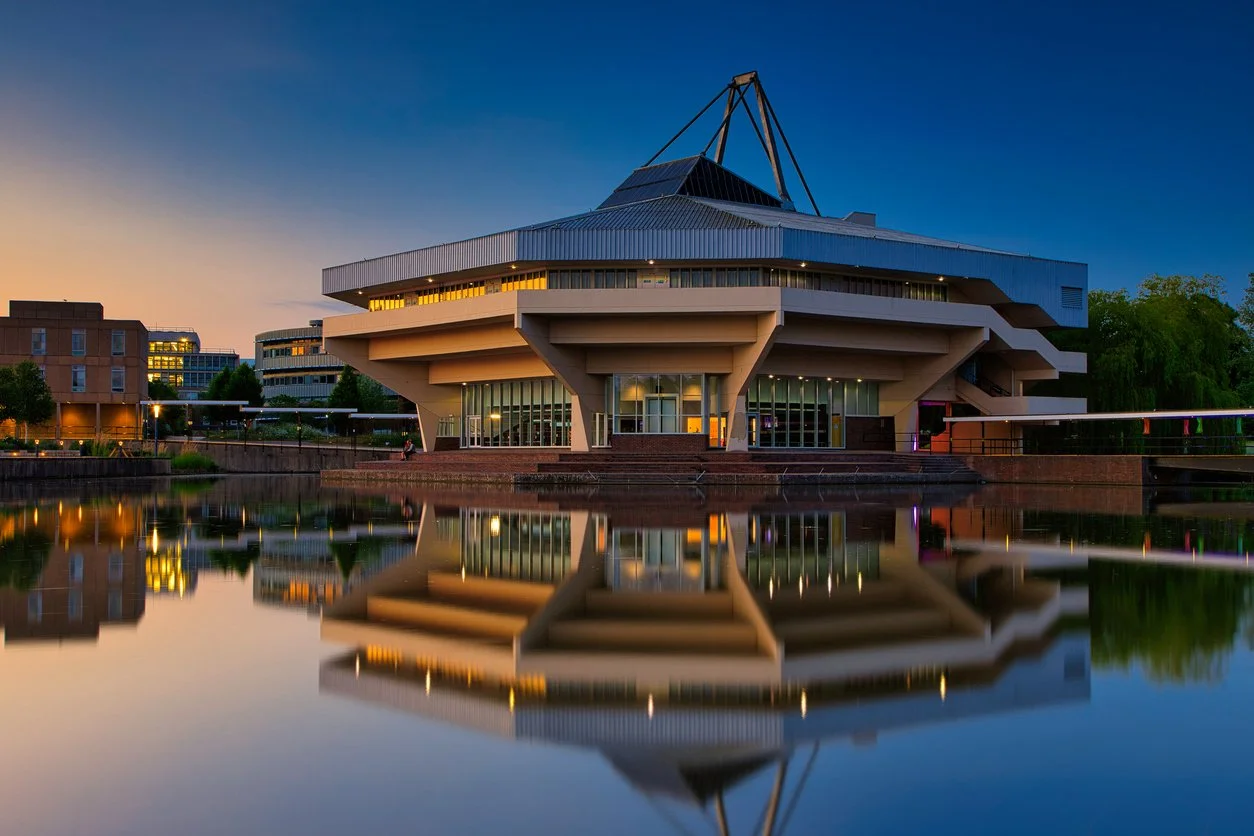
I write from my personal lens: my undergraduate experience at the University of York in England, decades of professional work, and many years recruiting, interviewing, and working with top-tier graduates from U.S. Ivy League and other elite institutions, and years observing with clients how education interacts with career trajectories, life satisfaction, and health. While I serve on the Americas Board for the University of York, this article reflects my personal views only. It is unpaid, unsolicited, and not representative of the views of the University or any nonprofit.
Understanding University Paths: Breadth, Specialization, and Hybrid Models
Universities vary widely, and these differences shape long-term outcomes. Looking at both U.S. and U.K. systems highlights some key distinctions. In the U.S., the term “college” is commonly used to describe undergraduate education, while in the U.K., the equivalent is “university.” Despite the linguistic differences, both systems influence students in profound and lasting ways.
Specialized or Technical/Professional Degrees focus on early career clarity and direct employability. In the U.S., MIT (engineering, CS, business), Harvard Medical School, Johns Hopkins (medicine), and UPenn’s Wharton School (business) provide rigorous professional training. In the U.K., Cambridge (engineering, sciences, medicine), Imperial College London (STEM), and LSE (business, economics, social sciences) offer similar pathways. Graduates might enjoy higher starting salaries and job security, but U.S. programs can carry significant costs, and these degrees may offer less flexibility for career changes or complex life challenges without further training.
It’s worth noting that terms like Ivy League in the U.S. and Russell Group in the U.K. often come up in discussions of top-tier universities. The Ivy League refers to eight private U.S. institutions known for academic excellence, prestige, and strong alumni networks. The Russell Group is a U.K. association of 24 research-intensive universities recognized for high-quality teaching, research, and graduate outcomes. While attending these universities can confer advantages, it’s important to remember that personal experiences, curriculum type, and skill development often shape long-term adaptability and well-being more than prestige alone.
Broad-Academic or Interdisciplinary Programs encourage exploration across disciplines, critical thinking, and reflective learning. In the U.S., liberal arts colleges like Williams, Amherst, and Swarthmore provide flexible curricula. In the U.K., York, Edinburgh, and St Andrews foster interdisciplinary learning, even if degrees aren’t labeled “liberal arts.” Graduates gain adaptability, problem-solving skills, and reflective thinking, which support long-term career flexibility and personal growth, though immediate employment paths may be less certain.
Hybrid Programs combine depth and breadth, balancing professional skills with adaptable thinking. In the U.S., Stanford, Duke, and the University of Michigan integrate specialized and interdisciplinary learning. In the U.K., UCL, King’s College London, and Warwick offer similar hybrid models. Costs and program lengths vary, with U.S. programs generally more expensive, though scholarships exist in both systems.
“Education shapes not just what you know, but how you think, approach problems, and navigate setbacks.”
University experiences influence how individuals develop judgment, tackle challenges, and cope with setbacks - skills essential for navigating life’s uncertainties.
Long-Term Health Implications
Education affects more than career success; it influences physical and mental health. Higher educational attainment correlates with longer life expectancy, healthier behaviors, and lower mortality risk. For example, U.S. college graduates live, on average, 11 years longer than those who do not finish high school (Institute for Health Metrics and Evaluation, 2025; healthdata.org). A 2024 meta-analysis in The Lancet Public Health found that each additional year of education reduces early mortality risk by ~2%, with 12–18 years of schooling associated with up to 34% lower mortality (healthdata.org). Columbia University researchers linked upward educational mobility to slower biological aging (publichealth.columbia.edu), and studies in JAMA Cardiology show higher education correlates with lower incidence of cardiovascular disease (jamanetwork.com).
While most research focuses on overall educational attainment or institution quality rather than the specific type of curriculum (e.g. specialized vs broad), there is robust evidence that more education - defined in terms of degrees or years of schooling - is associated with better long‑term physical health, lower mortality risk, and improved longevity. For instance, a large U.S. study found that each additional educational degree beyond high school strongly correlates with reduced risk of death over time. PubMed+2PMC+2 Similarly, a more recent longitudinal analysis demonstrated that attending a higher‑quality college predicts better physical health in midlife compared with attending lower-quality institutions or not attending college. PMC
Therefore, while curricular breadth vs specialization remains under‑studied, the overall evidence supports viewing higher education as a substantial resource that can confer health advantages through socioeconomic benefits, increased health literacy, access to resources, and greater life stability.
The Ripple Effect: Family and Caregiving
Education shapes not only personal health but also how we navigate family responsibilities. Many adults belong to the “sandwich generation,” caring simultaneously for aging parents and children while managing financial pressures.
“The way we were taught to think, analyze, and adapt in university influences how we manage caregiving, stress, and health experiences and decisions decades later.”
Resilience, problem-solving, and adaptability - nurtured through education - support better outcomes for both caregivers and dependents. For example, when my mother faced a life-threatening situation in hospital, the communication and critical thinking skills I learned at university guided how I interacted with doctors and surgeons, assessed information under pressure, and made decisions. Years of professional experience built on this foundation, but the seeds were sown through my educational path.
Research shows that resilience interventions can reduce caregiver strain and improve outcomes for both caregivers and patients (BMC Nursing, 2025). Education strengthens the ability to navigate medical information, advocate for aging parents, and support children in making healthy choices. Broad interdisciplinary programs, in particular, foster coping strategies, social support networks, and stress management - skills that influence health and wellbeing long after graduation.
Graduates Today: Debt, Employment, and Stress
The modern graduate faces challenges largely absent 25 years ago. Many leave university with significant debt and struggle to find work in their chosen fields. Some take temporary or unrelated jobs - working in bars, as nannies, virtual assistants, social media gigs, cleaning, or staying at home without work - often relying further on parental financial support. These pressures affect mental health, life satisfaction, sense of purpose, values, identity, and long-term well-being.
Financial stress does not end at graduation; it often compounds over time. As graduates move into adulthood, pressures can intensify - raising children, supporting families, and caring for aging parents, sometimes with financial responsibility. Parents often remark, “I’m earning more money than I’ve ever earned in my life, but I’ve never felt so poor.” The weight of financial commitments can be vast, particularly for families in high-cost cities managing children’s education, social expectations, and lifestyle costs.
This underscores that education is more than credentialing: it shapes how individuals respond to setbacks, navigate stress, and make long-term life decisions. By fostering critical thinking, problem-solving, and adaptability, education equips graduates with the tools to manage these ongoing challenges.
Reflection: My Own Path and Insights
Looking back, my education at the University of York was not “liberal arts” in name but embodied its principles: interdisciplinary learning, critical thinking, and intellectual curiosity. At the time, in choosing my degree subjects, I focused on employability and growth rather than health, purpose, or life satisfaction. I pursued a Bachelor of Science in Computer Science, concentrating on Information Technology, Business Management, and a Foreign Language.
Now, 25 years later, I can see how my experiences at York shaped my problem-solving, resilience, adaptability, and my ability to connect with myself and others. I learned to advocate for myself and others, collaborate effectively, contribute to and lead teams, and work with focus and commitment. These lessons extended far beyond my Computer Science studies and continue to influence my approach to work, life, and family. Education shapes not just what we know, but how we think, act, and respond to life’s challenges.
I’ve observed that technical mastery and early career success are valuable but often insufficient for long-term adaptability, wellbeing, and resilience. If I were choosing a university today, I would want to engage in programs that allow me to master a professional subject while also developing skills that can be applied to life’s unpredictable challenges - from career setbacks and rejections, to caring for sick children, supporting loved ones through illness or loss, or navigating life when it doesn’t go as planned. This doesn’t mean lessons explicitly about these topics; rather, it’s the academic work itself - the teaching methods, group projects, deadlines, and the rigor of producing high-quality work - that builds the ability to respond to challenges. Pulling all-nighters to perfect a dissertation or project may feel like academic pressure at the time, but those experiences cultivate stamina, focus, problem-solving, and resilience that carry forward into long hours, high-pressure situations, and unexpected challenges in life and career. I would want my university experiences to lay a foundation that strengthens both professional capability and personal resilience, while also fostering intellectual growth and a deeper sense of self.
I also notice that many students today struggle with self-worth. They may be extraordinarily talented academically yet have difficulty recognizing their own value and capabilities. Some lack the courage or humility to pursue opportunities and navigate the job market, while others exhibit an overinflated sense of their own abilities - hubris that can become a stumbling block on the path to success. Balancing confidence with self-awareness is a challenge many graduates face, and it can significantly impact both career trajectories and personal growth.
No Perfect Path: Understanding Yourself
Ultimately, there is no universally “right” college path. Specialized programs offer clarity and certain career advantages, while broad or hybrid programs foster reflection, adaptability, and lifelong learning.
Choosing a college is not about right or wrong - it’s about understanding yourself, reflecting on your values, and cultivating skills and perspectives that will serve you for decades, even amidst family, cultural, or societal pressures. Today’s students face unprecedented stress, costs, and uncertainty, making this reflection more important than ever. The rise of college admissions consultants worldwide highlights how eager undergraduates are to navigate this complex path with guidance.
“University shapes your mind, your well-being, and your ability to navigate life - not just your career.”
In Summary
Education interacts with career, health, caregiving responsibilities, financial realities, and personal resilience in ways that few 18-year-olds can predict. Looking back decades later, it becomes clear how profoundly these experiences influence life satisfaction, health, and the ability to respond to setbacks.
Reflecting on decades of experience, it is clear that the impact of university goes far beyond academic knowledge or early career success. The challenges, methods of learning, group work, deadlines, and opportunities for reflection shape resilience, problem-solving, adaptability, and self-awareness - skills that influence health, well-being, and life satisfaction throughout adulthood. Education leaves a lasting imprint on how we respond to setbacks, manage stress, navigate family and caregiving responsibilities, and make long-term life decisions.
Ultimately, the value of college lies not only in mastering a subject, but in the experiences that expand thinking, foster adaptability, and cultivate the mindset needed to thrive over decades. These lessons are as important as any professional qualification, providing the foundation for a resilient, purposeful, and fulfilling life.
Further Reading & Research Sources
The Institute for Health Metrics and Evaluation (2024) conducted a global meta-analysis showing that each additional year of schooling is associated with roughly a 1.9% lower risk of adult mortality. This demonstrates the strong link between educational attainment and long-term health outcomes (healthdata.org).
The National Bureau of Economic Research (2018) provides a thorough review of experimental and quasi-experimental evidence on whether more schooling causally improves health and longevity (nber.org).
For a more accessible summary, The Guardian (2024) explains that every additional year spent in school or university improves life expectancy, highlighting findings from the Lancet Public Health meta-analysis (theguardian.com).
A National Institutes of Health (2025) report also links educational attainment levels with mortality trends in the U.S., emphasizing ongoing relevance for public health (nih.gov).
Research in BMC Public Health (2025) found that lower educational attainment is associated with increased all-cause mortality and higher risk of chronic disease complications in the UK, showing that education influences long-term health outcomes beyond simple career advantages (bmcpublichealth.biomedcentral.com).
Additionally, BMC Geriatrics (2024) demonstrated that higher education promotes health and survival among older adults, with the effects more pronounced for women, providing evidence from a global context (bmcgeriatr.biomedcentral.com).
Disclaimer: The information and services provided by Birch Cove are for educational purposes only and are not a substitute for professional medical advice, diagnosis, or treatment. Birch Cove is not a medical provider and does not treat, cure, or prescribe for any medical conditions unless otherwise stated. Always consult your physician or qualified healthcare provider with any medical concerns. Birch Cove assumes no liability for actions taken based on the provided information or services. Product links may be affiliate links, meaning Birch Cove could receive a small commission on purchases.